One of the problems with conventional nuclear power plants is that they rely on an extremely hazardous fuel which persists for thousands of years. What if we could engineer a reliable and simple solution for dealing with these nuclear power hazards? By using a radically different engineering approach, a California-based start-up, Deep Fission Inc., say they have.
To manage hazards, every good engineer knows about the hierarchy of hazard control. At the top is “elimination”, but unless we are prepared to relinquish our society’s dependence on energy, this is not feasible. Next best is “substitution”, and yes this is happening with renewables and other energy sources which many argue have superseded the need for nuclear power. On the other hand, nuclear advocates point to the potential of reliable 24/7 “firm” power provided by nuclear generation.
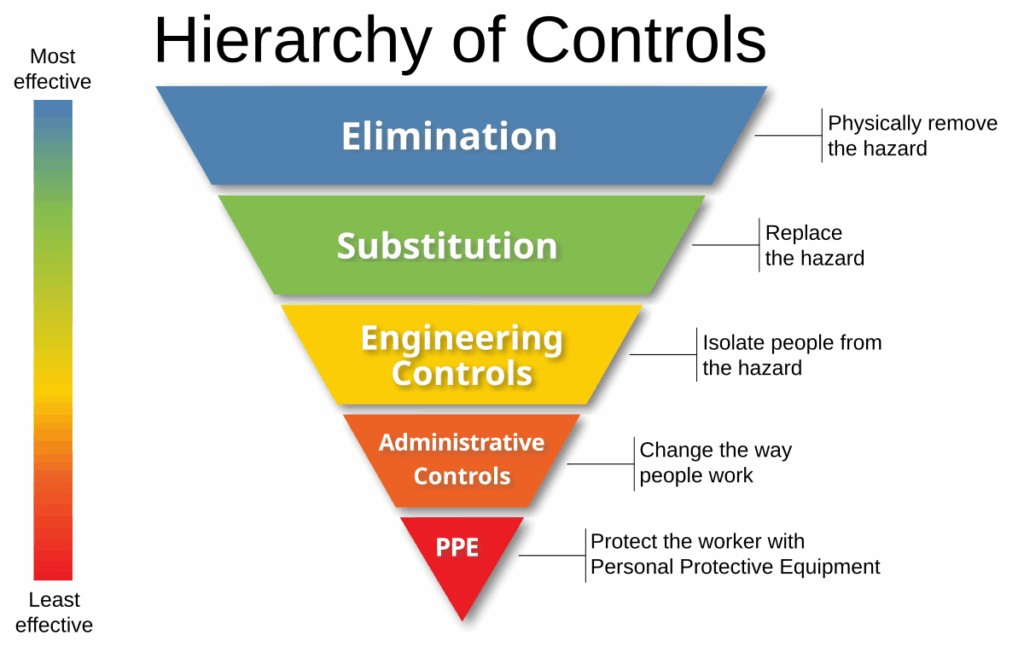
To separate nuclear hazards from humans, conventional nuclear power plants rely on the next step down on the hierarchy scale – “engineering controls”. This is achieved using high-pressure metallic containment of the nuclear core in addition to a concrete dome to protect against leaks, attack or falling 747’s. History shows that this approach is not foolproof. Further, safely storing long-life hazardous waste is a work-in-progress with insufficient experience to tell whether there is a truly long-term solution yet available.
Deep Fission’s concept elegantly and simultaneously solves the problems of containment and waste storage. It involves building a reactor at the bottom of a mile-deep shaft and filling the shaft with water. This minimises the risk of radioactive leaks while naturally providing the required water pressure in Pressurized-water Reactor (PWR) technology. The surrounding rocks provide the containment and the ultimate storage site of the spent fuel.
The depth of exactly a mile (1.6km) is not a random choice. A water column a mile-high corresponds to the 160 atmospheres of water pressure required for conventional PWRs.
The company has drawn on drilling expertise from the oil and gas sector to determine an optimum shaft diameter of 30 inches (75 cm). It is a realistic size for a nuclear core using standard Low Enriched Uranium (LEU) fuel.
The Economist1 describes how the system would operate:
Once in place, the buried core would be treated as if it were a source of geothermal power. Water heated by it would be brought to the surface through a pipe in the shaft, used to produce turbine-turning steam, and then returned to the shaft to keep up the pressure. The core itself would be pre-loaded with enough uranium fuel to last for two years, after which another would be lowered on top of it, then another, and so on, for a working life of 50-60 years (the estimated lifetime of the casing of the first core). The shaft would then be pumped dry and sealed with concrete, obviating the waste-disposal problem.
Deep Fission claims that each unit will cost US$30m and produce 15MW of electricity (smaller than most nuclear submarine generators) at a levelized cost of 5 to 7c per kWh. A grid-scale facility will require multiple shafts. An output of 1.5GW would require one hundred shafts. The company claims such an installation would have a surface footprint of only around 3 acres (1.2 ha) which equates to a spacing between shafts of approximately 40 feet (12m).
This unique approach has the potential to disrupt the Small Modular Reactor (SMR) Technology sector before it even gets off the ground. SMRs boast factory-scale production as a means of reducing the costs of grid-scale conventional plants, but are not yet proven particularly as they lack the economy of scale, being 5 to 10 times smaller than conventional plants. However SMRs still require surface containment structures and an acceptable means of waste storage.
Deep shaft reactors by contrast are a further 10 to 20 times smaller again, so benefit even more from factory-scale production and have containment and waste storage inherent in their design. Further, Deep Fission claim that they can deploy a shaft reactor in six months.
The company hopes to get its first unit up and running by 2029, pending regulatory and licensing approval.
At a high level, one has to agree with The Economist when it concludes that “sometimes an idea is so elegant that it really deserves to work.”
The writer is a co-author of Court of the Grandchildren, a novel set in 2050s America.
Reference: 1Burying nuclear reactors might make them cleaner and cheaper , The Economist, 3 September 2025
Main image credit: PIRO4D via Pixabay
For posts on similar themes, consider:
The Race to 100% Renewable Electricity