We have all witnessed the rapid change brought about by technology, but has the world fundamentally changed? According to author Solomon Harrington, the answer is no. In his book Nothing New Under the Sun, he argues that human behavior changes very slowly and therefore “ambitions that shaped ancient kingdoms still shape modern corporations. The incentives that structured medieval economies still appear in modern digital markets”.
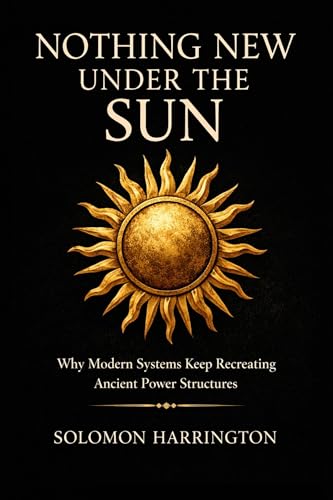
To demonstrate his thesis, the author highlights the parallel between old and new systems using case studies that provide some fascinating insights.
In the chapter titled the ‘The Digital Sharecropper’, the author sees parallels between the freed slaves after the American Civil War and the freelancers in today’s gig economy. Gaining freedom after the civil war was great step forward except the newly freed had no money, no land, and no tools. The landowners did but they had no labor to work their land.
A solution, known as sharecropping, involved the landowner allowing a newly freed family to farm portion of the land in return for a portion of the resultant crop. Superficially this appeared to allow the former slaves to work for themselves. However, the landowner determined the parcel of land, provided supplies on credit, and controlled the market and record keeping. They also had the power to change their share of the crop as the workers had little alternative to move. It was slavery in all but name for the vast majority of farmers.
Fast forward to today and the system repeats in platforms like YouTube, Instagram and Tik Tok. The platform is the “landowner”; the creator is the “farmer”. The “crop” is views, likes and watch time. The problem is that the creator does not own the audience – the platform does. Can you move your audience to another platform? The answer is usually no, or with great difficulty and rebuilding. The platform decides on the viewing algorithm, the revenue model and collects information about your audience. The creator doesn’t have a business but a tenancy agreement that can be changed whenever the platform chooses.
Another chapter titled ‘The 18th-Century App’ compares the home wool-spinning arrangements of the 18th Century England, where merchants would deliver raw wool to households who would spin the wool using their own spinning wheels for a fee, with the Uber drivers of today who provide their own cars, fuel and maintenance for a portion of each fare. The economic relationship and risk transfer is the same.
The final example I’ll reference is perhaps the most interesting. Titled ‘The Moral License’, the author draws parallels between the selling of indulgences by the Catholic Church in the 16th Century and the use of climate offsets today. Purchasing indulgences allowed the wealthy to maintain their lifestyles comforted by having their moral accounts balanced. Today companies can purchase carbon offsets, continue high-emission activities while claiming progress toward climate goals. The moral issue is the same – a way to claim virtue without fundamentally altering the behavior that created the problem.
There are many more case studies in the book which highlight how it is human behavior and incentives, not technology, that sets up power and organisational structures.
C.S. Lewis described modern bias as chronological snobbery as it assumes that something new is also wiser and more advanced. The author has done a good job of showing how human incentives remain remarkably consistent across centuries and that systems still evolve in ways that benefit those who design and control them.
The writer is a co-author of Court of the Grandchildren, a novel set in 2050s America.
For posts on similar themes, consider: